
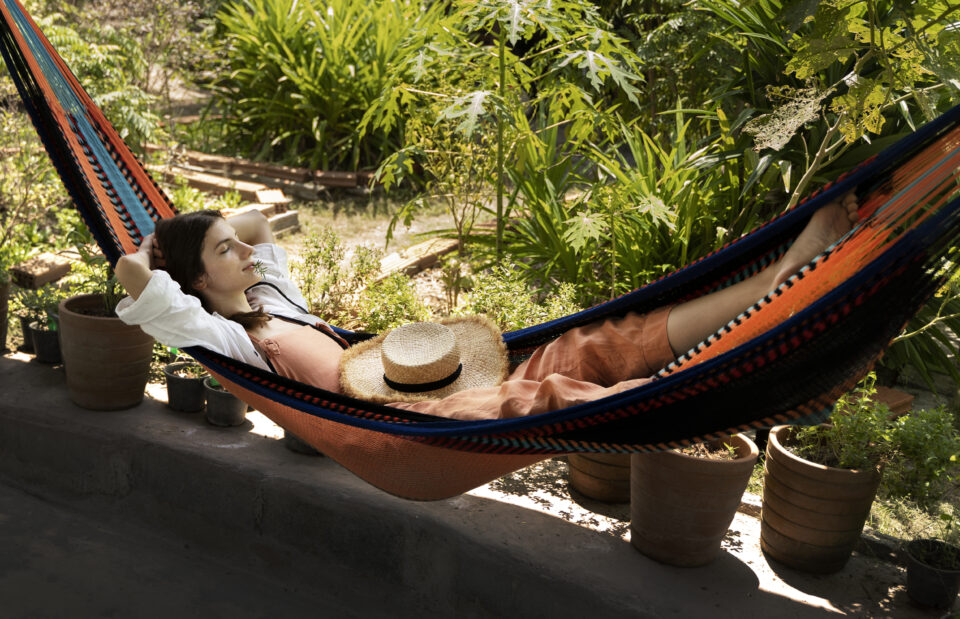
People often think that being a travelling writer means sipping cocktails in a hammock while typing overhyped travel content. But what if you’re writing fiction? Travelling as a fiction writer isn’t something you hear often, and I’ve found it hard to find honest stories that show what this life is like. Other than writing stories with an ocean view, travelling while writing fiction books is like living in your story world with a constant flow of inspiration that fuels your novels. But it’s also the life that gets messy and unpredictable. I’m sharing 7 things no one ever tells you when you write fiction while travelling.
1. You can write fiction as a travelling writer, but not in the way you think
Just because you don’t fit the postcard image of a writer typing away in pretty cafes doesn’t mean you can’t write fiction on the road. Most people imagine travelling writers living their best lives, sipping iced lattes and focusing on their writing. But the reality is usually just having a slow morning and sweaty fingers when you write in that tropical outdoor cafe. At the same time, your iced matcha latte tastes like shit.
I used to believe travelling and writing were complete opposites. And while I loved my summer adventures, I couldn’t see how to integrate them into my creative life. I never got many words out during a trip. I needed the perfect desk, silence, and a calm mood to write. Turns out, perfection has nothing to do with it. You don’t find the ideal writing space while travelling; you create it. It helps once you realise that your routine doesn’t need to look the same every day. Instead of waiting for the ideal conditions, you use the exact surroundings you have and create within that space. And if you do it often enough, you’ll train that muscle.
2. Travel changes your writing voice
Something I never expected as a travelling writer is how much the places I move through shape my writing voice. Spending so much time in Australia has changed the way I think, speak, and translate ideas onto the page. English has become the language I write and even start dreaming in. Local slang creeps into character dialogue without me trying, and I write character exchanges with the dialect running in the back of my mind. All these experiences find their way into my characters. When I shaped their profiles back in The Netherlands years ago, I had a vague idea of where they were from, but living in these places makes their voices more distinct.
The more I sink into everyday Australian life, the more the layers of this place feed my story world. And to be honest, it’s a bunch of little things, but because of these details, the story feels more real than it ever did. I had hoped that my creative adventures would give me new inspiration, but I’d never expected how much they would enrich my writing voice. And when I read back my edited story, I feel like, “Wow, did I actually write this?” And for someone with imposter syndrome, that feels huge.
3. Your environment becomes your writing retreat
One thing you learn quickly as a travelling writer is that your writing retreat isn’t a fancy place; it’s whatever space you have that day. I’ve written in hostel lounges, at random kitchen tables in Airbnbs, on beaches, and in the middle of a national park with cockatoos screaming around me. That last one didn’t even involve my laptop. I sat under a tree and quickly took out my phone to describe their sound because they appear in my book.
Most days, my writing retreat is me in my PJs with a cup of tea or coffee, typing away before I even remind myself that I need to brush my teeth. Other days, it’s whatever quiet corner I can claim for an hour. The point is, you stop looking for the perfect setup and start using whatever your environment gives you. Once you do that, it becomes much easier to immerse yourself in your fiction world while you’re travelling.
4. You find deep writing inspiration for your novel
For me, travel is the ultimate way to find inspiration for writing a novel. Every new creative adventure brings constant changes in settings and new sensory input, which fuels a flow of ideas to incorporate into my story. I also have a completely new series idea I can work on once I finish my current project.
Even the down days of a travelling writer can bring you a powerful feeling of inspiration. Because every emotion you go through on your journey can be incorporated into your stories. One of the hardest things about travelling solo and moving places is making and maintaining deep friendships. Now imagine how these emotional roadblocks can also shape the internal world of your main character. It makes them feel alive and genuine to your readers. Keep a little diary and literally writing what you feel and use it later for your story purposes.
5. Focus on writing can be difficult
You can sense a ‘but’ coming, right? Well, here it is. Travel fatigue, jet-legged, losing writing flow between moving places and missing your loved ones at home. It’s all part of the adventure, too. Whether you’re a nomadic writer or set out on a month-long creative journey, you’ll likely experience a mix of these things and more.
Even though I don’t struggle with writing inspiration, I still have days where finding focus is almost impossible. Sometimes it’s the accommodation, sometimes it’s lack of sleep, or simply too many new impressions at once. Writing on the road means constantly re-learning what helps you settle, what distracts you, and what your brain needs before it can drop back into your story. And despite all its excitement, travelling isn’t always inspiring. When you’re overstimulated, your creativity gives you the middle finger.
6. The paradox of belonging
Belonging is another big one for me. I feel most alive when I arrive somewhere new. Still, I also grow attached to places, especially the ones that move me deeply or introduce me to people I bond with. Then, before I know it, it’s time to leave again. Even after spending so much time in Australia, I still get called a visitor or a tourist, and it stings more than I like to admit. And while you meet amazing people on the road, the connections are often fleeting. At home, I’ve got friends who only need one look to know how I feel. I miss that level of ease and depth sometimes. But all these challenges are precisely the things that shape my characters and the emotional core of my stories.
7. How to make this life sustainable
People often ask how I balance writing my novel, travelling full-time, and affording it all. It’s not one big secret but a mix of small choices. I write in the mornings four to five days a week because that’s when my brain is at its most creative. And in the afternoons, I work on this blog, which hopefully will help me support my dreams in the long run. For the real money to live from, I’ll have to return to The Netherlands to work and replenish my savings. And while I travel, I keep my lifestyle as simple as possible. Living in hostels, house-sitting, or staying with friends helps me save on accommodation. I earn and redeem airline miles whenever I can, and I choose slower travel. Hence, I’m not constantly draining my energy or my bank account.
At the moment of writing this blog, I’m only a few months into this life, and I still rely heavily on my savings, so I’m not pretending I’ve cracked the code. What I have figured out is how to build enough structure to keep my writing moving, while giving myself the time to grow this blog and work toward publishing my book series. Sustainability, for me, comes from routines that suit my creativity, ways to keep costs down, and small income streams that support my writing life without taking it over. It’s not glamorous, but the beauty is that my life feels nearly perfect this way, and sometimes I feel guilty for living the way I do. Balancing it all is something I get better at with each step.
My final say about being a travelling writer of fiction
Travelling as a fiction writer is incredibly messy, frustrating and amazing at the same time. I’m still spending more than I’m earning, I’ve lost connections, and I’ve gained freedom and a wild amount of writing inspiration. I’ve conquered fears, and I’ve cried for hours, hugging someone else’s cat against me. But all these emotional highs and lows help me to make my scenes feel vivid and real.
This life allows you to see some of the most stunning corners of the world while working on your novels. Travelling through the country that shaped my story world has made me feel more alive and dedicated than ever. Especially travelling solo has pushed me to learn my limits and recognise boundaries. I’ve had moments of despair, but I’ve also never felt so much genuine joy in my life. So, do your own math.